Hypex

Autonomous Denial Recovery for Medical Practices & Billing Teams

Payers deny with software, so hand-written appeals lose. Hypex chases, drafts and matches around the clock, and a human approves every filing. Where a payer's own verified policy applies, the letter quotes it back to them. You keep 85% of every dollar recovered.

hypex / review queue

4 drafts, sample data

Awaiting your approval

EV = win odds × amount

DenialPayerAmountEVState
CO-197Aetna$2,415.0082%Ready to file
CO-50UnitedHealthcare$1,180.4074%Needs evidence
CO-45Cigna$3,062.7568%Ready to file
PR-204Medicare Advantage$894.2091%Ready to file

Filing check

CO-197 · Aetna · sample

  • Denial criterion addressed
  • Corrected diagnosis on the wire
  • Cites governing payer authority
  • Clinical note attached

Illustrative only · nothing here files anything

You pay only after the payer pays you

The fee is a share of money that has actually landed on your remittance. A claim the payer refuses to pay costs you nothing, and nothing gets invoiced.

You keep 85%Hypex fee 15%
Hypex takes 15% of recovered revenue.
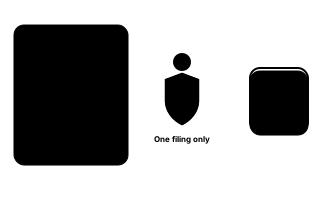
A person approves every filing
The engine drafts, chases and matches. Nothing reaches a payer until a human says yes, and high-dollar claims always wait.
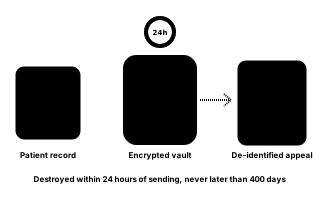
Zero identifiers retained
Names ride in an encrypted vault, then are destroyed within 24 hours of sending and always within 400 days.

Works with what you already run — EDI 837, EDI 835, CSV, SFTP, EOB If your billing system can export it, we can ingest it. No rip-and-replace.

Denials are rising. Most are never appealed.

Payers deny more claims every year, and denial work is pure labor: look up the rule, gather records, write the letter, chase the portal, follow up. Appeal volume scales with staff hours. So a large share of appealable denials is written off not because it lacks merit, but because nobody has a free Tuesday afternoon to fight it.

The numbers are stark: US hospitals lost $48.4 billion to final denials and uncollected bills in 2025, up 25% in a single year (Kodiak Solutions benchmark, 2,300+ providers). Industry analyses put the initial denial rate at about 11.8% and rising. When denials are appealed, published payer data shows they are often overturned: 80.7% of Medicare Advantage prior-authorization denials that were appealed in 2024 were partially or fully reversed (KFF). The gap is rarely merit - it is that appealable denials go unworked.

The appeal gap, in one number

KFF analysis of HealthCare.gov plans, 2023-24

0.4%of denied claims are ever appealed.

Yet about 4 in 10 (44%) of the appeals that are filed succeed. The gap is rarely merit. It is that appealable denials go unworked, because the work is pure labor and labor does not scale. That gap is where Hypex works.

Not every denial is worth appealing, and we say so. The share with real grounds and never reworked is the opportunity, and it is large.

Sources: Kodiak Solutions revenue-cycle benchmark 2025, KFF Medicare Advantage appeal data 2024, KFF analysis of HealthCare.gov plans 2023 (376,508 of 86 million denied claims appealed = 0.44%; 44% of appeals overturned), Experian Health State of Claims 2025. Initial denial rate averages 11.8% and is rising.

Hypex is the platform that closes that gap

Denial work fails on the unglamorous parts: the wrong root cause, a generic deadline, an unsupported citation, a duplicate filing, a payer that goes quiet. These are the parts we built for.

01

The real reason, every time

Every denial is matched against 84 CARC codes and 85 RARC refinements to find the true root cause - not the payer's vague wording. You get whether it is actually worth appealing, the exact filing deadline, and precisely which evidence wins, all before any letter is drafted.

02

The right deadline, not a generic one

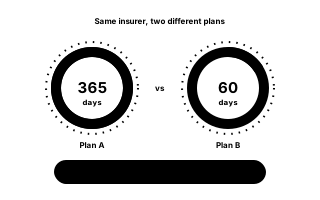
The same insurer can allow a year on one plan and sixty days on another. The deadline and filing route resolve for your specific payer and plan first, so the appeal is never filed late on an assumption.

03

Letters built against the matching rule

Each letter is grounded in the payer's own appeal guidance for that denial code. Where a payer's manual has been transcribed and verified, the letter quotes its exact wording and names the source; where it has not, the letter says so rather than bluffing.

04

Clean submissions, zero duplicates

Every appeal is checked for completeness before release - codes match, evidence attached, rule cited, deadline met - and a deterministic control number guarantees the same appeal can never be filed twice.

05

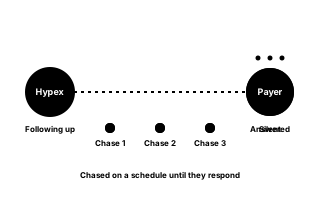
Silence gets answered

A payer that goes quiet is chased on a schedule - escalating follow-ups until they respond - so a denial does not die of inaction in someone's inbox.

06

Identity passes through, never settles

Patient identifiers are stripped before any model sees them and held in an encrypted vault only long enough to file - destroyed within 24 hours of sending, and always within 400 days. No PHI is ever written to durable storage.

07

You pay from confirmed money

A recovery counts only when it appears on the payer's own 835 remittance - restatements and reversals are excluded, never billed. No confirmed recovery, no invoice. You pay from money the payer actually sent, not from a claim of success.

08

A record you can hand an auditor

Every action on every claim is recorded in a hash-chained, tamper-evident trail. Edit one entry and the chain shows it. The full history is exportable at any time.

09

The reviewer stays in control

Auto-submission is off by default, and high-dollar claims always wait for a person. Your reviewer sees the evidence and the cited rule side by side and approves before anything is filed.

10

We earn when you earn

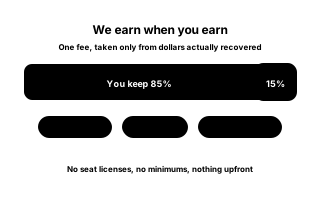
One fee: 15% of recovered dollars - you keep 85%. No seats, no minimums, nothing upfront. The fee lands only when the payer's remittance proves the money arrived.

Ten capabilities. If a claim fails, it failed at one of these.

Built for the three that write off denials

The engine is the same for all three. What changes is the volume, the dollar size, and who is holding the review queue.

Provider Direct

Medical Practices & Clinics

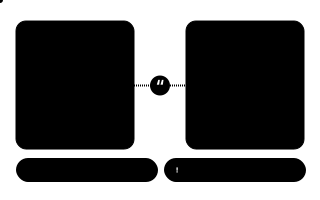
“Unworked denials, and nobody with a free afternoon.”

On $1,000 of denied value, a portion is appealable ground we work to recover. Use the calculator to model it against your own mix.

  • CSV / 835 upload
  • 1-click review & approve
  • Zero IT overhead
High-Volume Partner

Medical Billing Companies (RCM)

“A staff-hours ceiling that caps margin on every bucket.”

White-label back-office force multiplier on pure contingency, across every client in the book.

  • Multi-tenant isolation
  • Bulk clearinghouse feeds
  • Client performance analytics
High-Dollar Focus

Specialty & Surgical Centers

“Complex medical-necessity and prior-auth rejections.”

Defensible clinical evidence synthesis, citing exact clauses from commercial policies and Medicare LCD/NCD.

  • Policy clause citations
  • ERISA & prompt-pay teeth
  • Clinical documentation packaging

How Hypex compares

Manual billing rework is capped by staff hours. Legacy software charges monthly subscription fees whether claims recover or not. Hypex is paid only when money actually lands on your remittance.

Financial Model

In-house manual rework
Fixed salary & benefits ($55k-$70k/yr per FTE)
Legacy RCM software
High upfront setup + $500-$1,500/seat/month
Hypex autonomous RCM
Pure 15% Contingency. $0 upfront, $0 seat fees.

Denial Capacity

In-house manual rework
Capped by labor hours (~50% unworked write-offs)
Legacy RCM software
Flags errors; staff still drafts appeals manually
Hypex autonomous RCM
Every ingested denial investigated and graded on its merits

Appeal Quality

In-house manual rework
Generic boilerplate letters (high payer re-denial)
Legacy RCM software
Static mail-merge form templates
Hypex autonomous RCM
Grounded in payer-specific clinical policies & CARC/RARC codes

Silence & Deadlines

In-house manual rework
Often lost in spreadsheets or aged-out past timely filing
Legacy RCM software
Manual task notifications for busy billers
Hypex autonomous RCM
14 / 21 / 30-day escalation drafted and queued for your reviewer

Review Control

In-house manual rework
High coordinator turnover and burnout
Legacy RCM software
Unclear rules or auto-blasting
Hypex autonomous RCM
Human review on by default; large claims pause

Invoice Trigger

In-house manual rework
Paid every payroll cycle regardless of collections
Legacy RCM software
Billed monthly regardless of recovery outcomes
Hypex autonomous RCM
Invoiced ONLY after payer remittance deposits in your bank
You keep 85% of every dollar we recover. If a claim does not pay, you owe zero.Run Free Recovery Audit →

From denial to recovered revenue

The workflow running in the live Hypex console today. Humans decide what ships; the system does the chasing, matching, and paperwork. Full detail lives on the How it works page.

  1. Step 01

    Connect your denial feed

    Share denials through your existing clearinghouse, or upload a simple file. Whatever your team already uses works. Patient identifiers are removed immediately; only codes and amounts continue.
  2. Step 02

    The real reason surfaces

    Every denial is mapped to its true root cause in the payer's own words, plus whether it's worth appealing and exactly which evidence wins. All of it before any letter is written.
  3. Step 05

    Appeals draft against the cited rule

    Appeals are written from the matching policy rule, with the cited rule shown beside each draft. Where a payer's actual policy document has been transcribed and verified, it's quoted as the payer's wording with the source named.
  4. Step 08

    You approve, then it goes

    Nothing submits without a person saying yes, and high-dollar claims always wait for a human. When money comes back it's confirmed on the payer's own remittance. The 15% fee applies only to what you actually received.
  5. Step 10

    Outcomes, reported honestly

    Won, partial, or lost is recorded per appeal. A recovery rate is published only once there's enough real data behind it, and reads “not yet measured” until then.

See all eleven steps

Filing rules, evidence standards and the escalation schedule, step by step

Payer intelligence

We publish what we learn about your payer

Most appeal software treats every payer as the same shape. They are not. One insurer requires a fax instead of a portal, and using the wrong channel costs you ten to fifteen days. Another pends your appeal for a form you were never told about. What we know about each payer sits on a public endpoint, so you can read it before you trust us with anything.

—documented payer findings
—payers tracked
—kinds of behaviour

See the actual platform

Every screen here is a real view from the running Hypex console with de-identified demo data, not mockups. Swipe through them — this is the same interface your team would use on day one.

Claims feed

Denial intake & triage

Every denied claim, de-identified. Batch-upload a CSV/835 or connect a clearinghouse feed; each claim is de-duplicated, scored for recoverability, and matched to the right payer rule. Attach clinical notes per claim and the appeal builds itself from both.

CSV / 835 / 277 ingestrecoverability scoringper-claim evidence intake

de-identified demo data · live platform

Trust & Compliance

every claim enforced in code

Credentials we hold, and one we're honest about

Healthcare organizations trust Hypex with high-stakes revenue recovery. The technical architecture is built around verifiable data protection, HIPAA Business Associate governance, and continuous auditability.

HIPAA Business Associate
BAA covers all eight required elements of 45 CFR 164.504(e); signed before any PHI moves.
in force
Audit-ready history
Every action permanently recorded, tamper-evident, and exportable on demand, ready for any auditor or client review.
in force
Your data stays yours
Each client's workspace is fully isolated from every other's. No exceptions, no shared views.
in force
SOC 2 Type II
Not yet held. We will not display a badge we do not have - ask us for the audit timeline and control matrix instead.
in progress

Every control commitment is programmatically enforced and verifiable. Review our full security architecture and compliance specifications on the Security page.

View control matrix

Security & compliance

What we do to protect PHI

Hypex operates as a business associate under HIPAA. Each control below carries an attestation stamp.

PHI-purge test: request the verification package

A reproducible test fires identifier-shaped data at our system and verifies identifiers are destroyed with the 24-hour vault: never stored, never forwarded. Send a request and we email the runbook to your security team, so you can run it against our build before signing. Most vendors only assert this.

Request the suite

Patient identity never reaches the model

In force

Appeals backed by de-identified notes are drafted by a model from de-identified summaries only, never names or identifiers. Other appeals use AI-authored deterministic templates with no model call at runtime. No patient data is ever used for training.

Encryption in transit and at rest

In force

TLS 1.2 or higher on every connection. Managed encryption for storage and the database, with keys held in the cloud provider's key management service.

Access control and audit

In force

Tenant-scoped data access, token or API-key authentication, IP-allowlisted machine ingest, least-privilege roles, and an append-only audit trail of every action.

Verifiable, not asserted

In force

An open test suite asserts that no patient identifier reaches the database, the model, or the letter store. Your security team can run it themselves.

Breach response

In force

We notify affected covered entities without unreasonable delay and no later than 60 days after discovery, as required by 45 CFR 164.410 and your BAA. Our written breach-response procedure is provided on request during security review.

How much denied revenue could come back to you?

Use your own numbers to see what recovering your appealable denials could return, after the 15% fee success fee. It runs in your browser, nothing is collected.

Quick start

Estimate your recovery

What could come back to you?

Match your own numbers. Runs entirely in your browser - nothing is sent anywhere.

$1,400
62%

We have no measured default - this varies by your denial mix. Set it from your own appeal history if you have it.

60%

Your input, not a benchmark. For reference: 80.7% of Medicare Advantage prior-authorization denials that were appealed in 2024 were overturned (KFF). Lower the win rate to test a downside case.

Where the money sits

Denied write-offs
$420,000
Appealable portion
$260,400
Recovered at your win rate
$156,240

Net to you / month

$0

after the 15% fee on $156,240 recovered · you keep 85%

you · $132,804
15%

Recovered / year

$0

Hypex fee / year

$0

Staff hours this replaces

140 hrs/mo

About 1 full-time reviewer of appeal work - roughly $3,069/mo in loaded labor you don't have to hire. At 30-60 min per appeal ($2,046-$4,092 across that band).

Illustrative estimate only - actual results depend on payer mix, denial reasons, and documentation. Hypex is paid solely on dollars the payer actually pays, verified against the 835 remittance.

FAQ

The objections, answered plainly

Fifteen questions billing companies, clinics, and hospital teams actually ask - grouped by audience: cost & model, data & security, small firms, compliance & liability.

cost & modeldata & securityfor small firmscompliance
Read the FAQ

Start your pilot

From signup to first recovery in four steps

  1. 1

    Create your workspace

    Five minutes. BAA ready the moment you sign, with no waiting.

  2. 2

    Share one payer's denials

    A de-identified file, CSV or 835. Identifiers travel encrypted and are destroyed within 24 hours; only codes and amounts ever persist.

  3. 3

    Review real drafted appeals

    You approve what ships; follow-ups stage themselves.

  4. 4

    Get paid, then a 15% fee is invoiced

    Confirmed on the payer's own remittance. You keep 85%.

The deal

  • 15% only on verified recovery
  • Nothing upfront, no seat fees
  • 12-month agreement, 60 days' notice
Start your pilot Not ready? Run the free audit first.